Brussels Open Air Festival
Brussels Open Air Festival stands as a rare and ambitious initiative in today’s European urban landscape. At a time when many cities are becoming increasingly cautious about outdoor events due to concerns around noise, safety, and public order, Brussels has chosen a different path : one that recognises regulated, well-structured open-air culture as a legitimate and valuable use of public space.

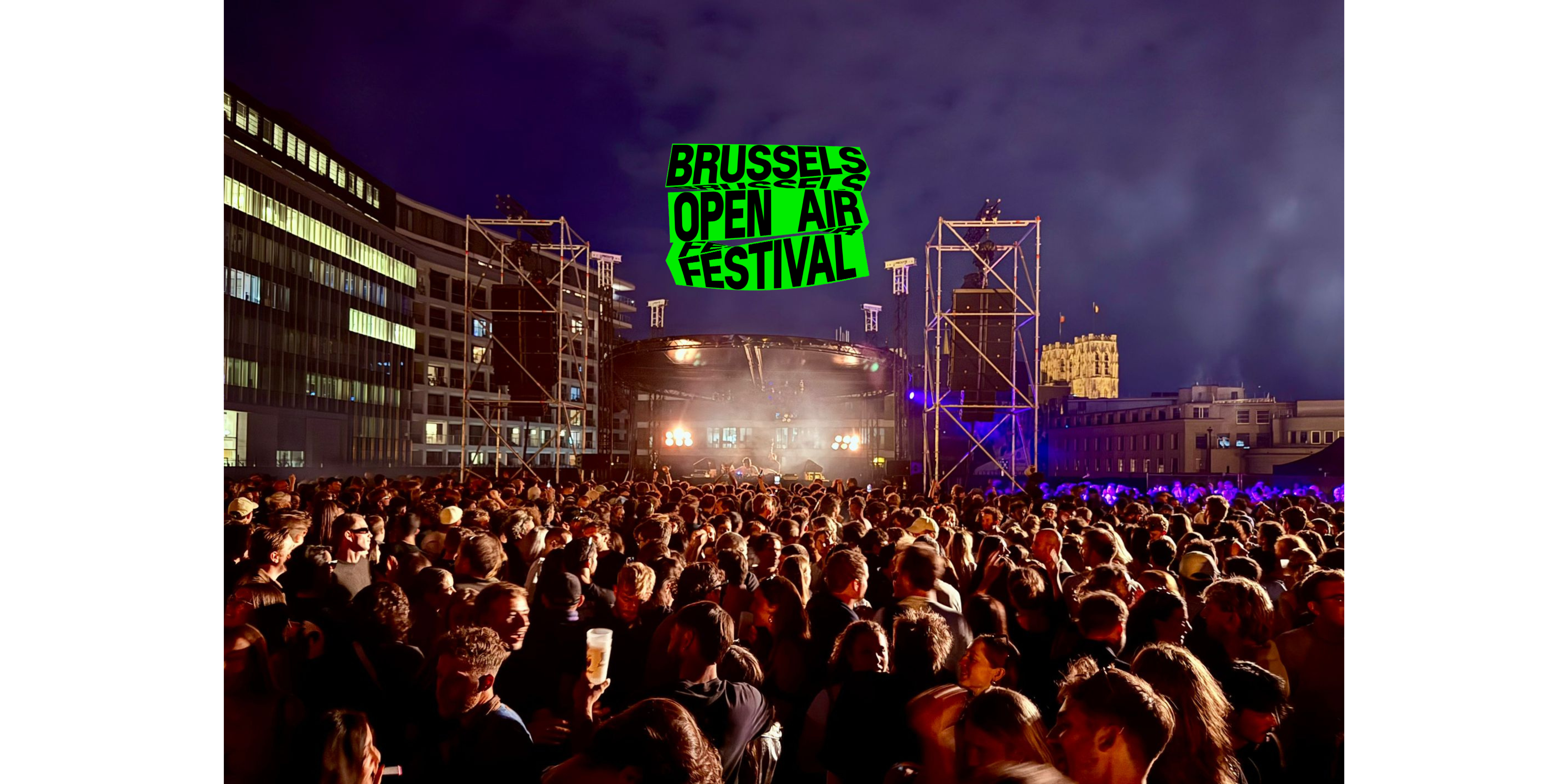
Supported by the City and public partners, the festival offered, for now, two edition and a unique demonstration of what is possible when authorities and cultural actors work hand in hand. And we’ll see that again in 2026.
Our Contribution
Opening access to public space
One of the festival’s most significant achievements was securing authorisation for multiple large-scale outdoor activations in central and strategic urban locations. By coordinating with municipal services, police, mobility actors, and local authorities, Brussels By Night helped demonstrate that open-air events can be delivered safely, responsibly, and with strong community consideration.This created a proof of concept for future editions and for other municipalities: with clear frameworks, dialogue, and anticipation of impacts, public space can remain open to cultural experimentation.
Structuring a fair and diverse ecosystem
Brussels Open Air deliberately relied on a wide range of collectives and organisers - from emerging grassroots structures to more established operators. Groups such as Corne de Gazelle, 21AM, Vortex, Vostock, and others brought distinct musical identities and communities into the festival, reflecting the diversity that defines Brussels’ electronic culture.
This model fostered circulation between small and large organisations, allowing younger structures to gain experience in large-scale production, compliance, and safety management, while benefiting from the visibility of a city-backed platform.
Financial support and professional development
Beyond programming, the festival provided concrete financial backing and production support to participating collectives.This accompaniment reduced entry barriers to public-space events and enabled organisers to invest in better technical setups, staffing, and harm reduction measures. In doing so, Brussels Open Air functioned as a learning laboratory.
Open Airs are becoming a signature of Brussels’ identity — positioning this culture as a defining feature of the city’s nights and days alike, and reinforcing Brussels By Night’s role in shaping a structured, inclusive, and sustainable urban nightlife ecosystem.